Navigation Systems Fleet Management Safety Standards

AGV Technology Solutions: The Complete Guide to Automated Guided Vehicles

Master AGV technology from navigation systems to fleet coordination. Explore laser SLAM, magnetic guidance, and vision-based navigation. Compare AGV vs AMR technologies and discover implementation strategies for manufacturing and logistics automation.

What Is AGV Technology? Understanding Automated Guided Vehicles

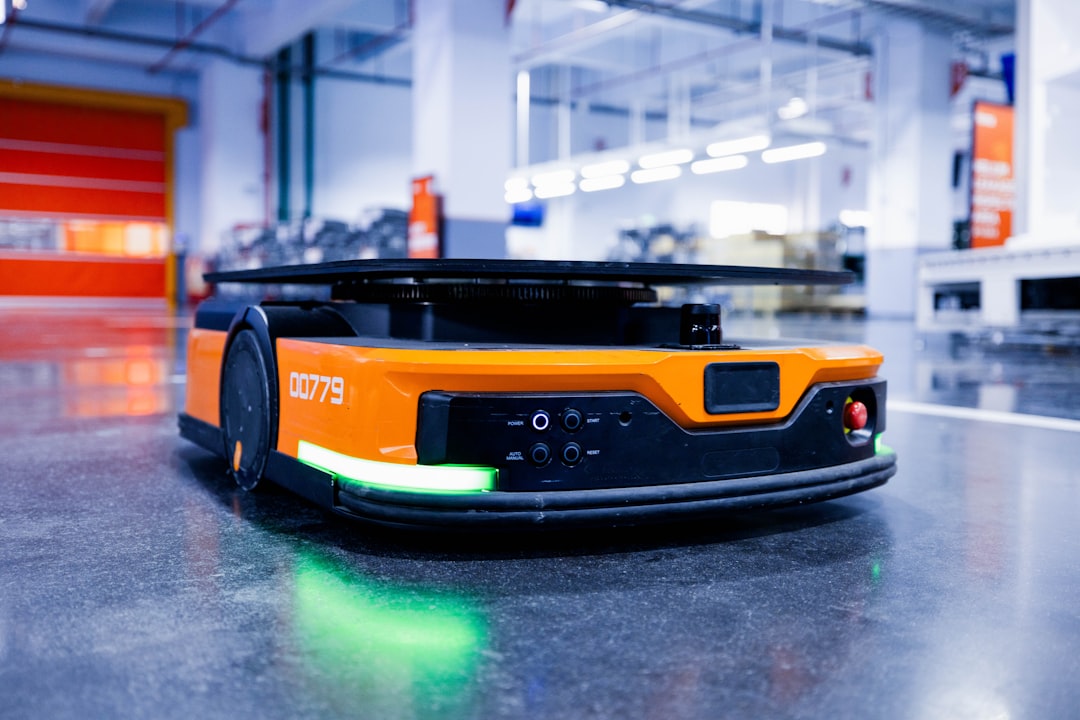
Automated Guided Vehicles (AGVs) are mobile robots that follow predefined paths or markers to transport materials within industrial facilities. Unlike their more autonomous cousins (AMRs), AGVs rely on fixed guidance systems—magnetic tape, laser reflectors, or wired paths—to navigate warehouse floors and factory aisles with precision and reliability.

First introduced in the 1950s for warehouse towing applications, AGV technology has evolved dramatically. Modern systems incorporate advanced sensors, wireless communication, and intelligent fleet management software that coordinates hundreds of vehicles simultaneously. Today's AGVs handle everything from pallet transport and assembly line feeding to complex picking operations in distribution centers.

The global AGV market continues to expand as manufacturers seek to automate material handling, reduce labor costs, and improve operational safety. With typical ROI periods of 12–24 months, AGV implementation has become a strategic priority for logistics operations worldwide.

70+
Years of AGV Evolution
15%
Annual Market Growth
24mo
Typical ROI Period
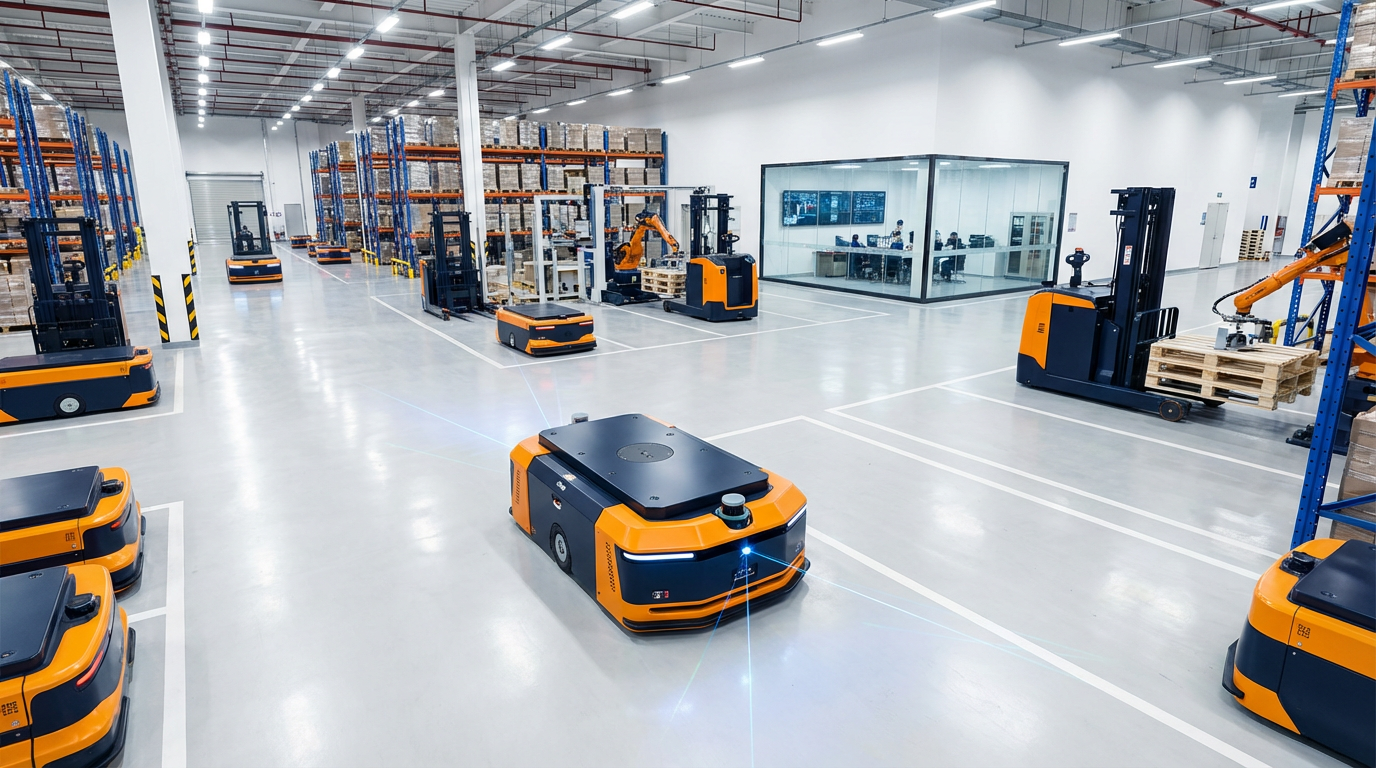
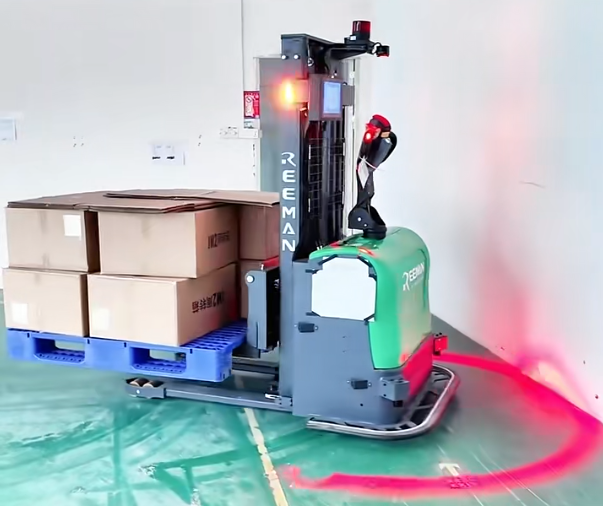
Automated Guided Vehicles operating in modern warehouse facility

AGV Navigation Technologies Explained

The navigation system is the core intelligence of any AGV. Understanding the different guidance technologies helps you select the right solution for your operational environment and flexibility requirements.

AGV vs AMR: Key Differences and Selection Criteria

Understanding the fundamental differences between Automated Guided Vehicles and Autonomous Mobile Robots helps you make the right automation investment for your specific operational needs.

Feature
AGV
AMR
Navigation Method
Fixed paths (tape, wires, reflectors)
Dynamic pathfinding (SLAM, vision)
Infrastructure Requirements
Requires installation of guides
Minimal to no infrastructure
Route Flexibility
Fixed routes, reprogramming needed
Dynamic rerouting in real-time
Obstacle Handling
Stop and wait for clearance
Navigate around obstacles
Initial Cost
Lower vehicle cost, higher install cost
Higher vehicle cost, lower install cost
Scalability
Requires infrastructure changes
Easy to add/remove units
Best For
High-volume, fixed routes
Variable tasks, changing layouts

Choose AGV When:

  • You have predictable, repetitive material flows
  • Your facility layout remains stable long-term
  • You need maximum throughput on fixed routes
  • You want proven technology with decades of reliability
  • You have dedicated aisles and defined pathways

Choose AMR When:

  • Your operations require frequent layout changes
  • You need vehicles to share space with pedestrians
  • Tasks vary throughout the day or week
  • You want minimal facility modifications
  • Flexibility outweighs maximum speed requirements

Deep Dive: AGV Technology Resources

Explore our comprehensive library of AGV technology guides, implementation strategies, and industry insights.

AGV Implementation and Integration

Successful AGV deployment requires careful planning across infrastructure, software integration, and operational workflows. Follow this implementation roadmap for optimal results.

1

Assessment

Analyze material flows, identify automation opportunities, and define ROI targets

2

Planning

Design routes, select navigation technology, plan infrastructure requirements

3

Integration

Connect to WMS/ERP systems, install infrastructure, configure fleet management

4

Deployment

Phased rollout, operator training, performance monitoring, optimization

Infrastructure Requirements

  • Floor condition and flatness specifications
  • WiFi coverage for fleet communication
  • Charging station placement and power
  • Navigation aid installation (if required)
  • Traffic lane markings and signage

System Integration

  • WMS/WCS connectivity and APIs
  • ERP system synchronization
  • MES integration for manufacturing
  • Fleet management software setup
  • Real-time monitoring dashboards

Safety Compliance

  • ANSI/RIA R15.08 compliance review
  • ISO 3691-4 safety validation
  • Risk assessment documentation
  • E-stop and protective device testing
  • Safety zone configuration

AGV Safety Systems and Standards

Modern AGVs incorporate multiple redundant safety systems to protect workers and equipment while maintaining operational efficiency.

LiDAR Safety Fields

Continuous 360-degree scanning creates protective zones that slow or stop the vehicle when objects are detected.

Emergency Stop Systems

Multiple E-stop buttons and automatic triggers halt all movement immediately when activated.

Vision-Based Detection

Cameras identify pedestrians, obstacles, and unexpected changes in the environment beyond LiDAR range.

Audio-Visual Signaling

LED status lights, directional indicators, and audible alarms alert nearby personnel of AGV movements.

Key Safety Standards

  • ISO 3691-4 Industrial trucks — Safety requirements
  • ANSI/RIA R15.08 Industrial Mobile Robot Safety
  • EN 1525 Safety of driverless trucks
  • VDI 2510 Automated guided vehicle systems
  • IEC 61508 Functional safety of systems

AGV Fleet Management and Coordination

Effective fleet management maximizes AGV utilization, prevents traffic conflicts, and ensures continuous operation through intelligent coordination.

Traffic Management

Centralized control prevents vehicle conflicts at intersections, allocates right-of-way, and optimizes path selection to minimize congestion and wait times.

Task Allocation

Intelligent job assignment matches transport requests to the nearest available vehicle based on location, battery level, load capacity, and priority.

Charging Coordination

Automated charging scheduling ensures vehicles maintain optimal battery levels without disrupting operations, with opportunistic charging during idle periods.

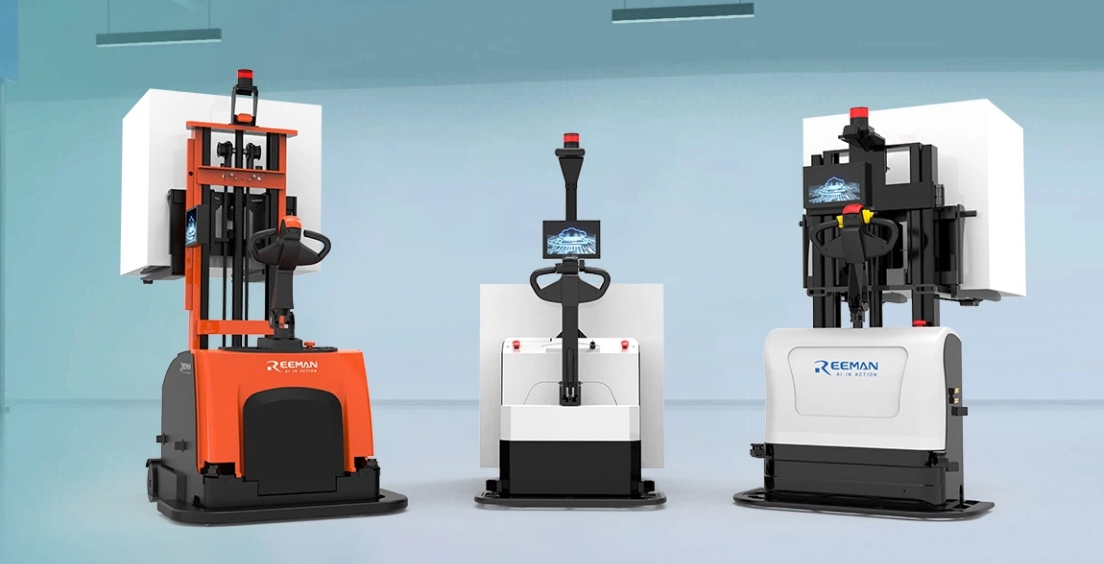
Reeman AGV Technology Solutions

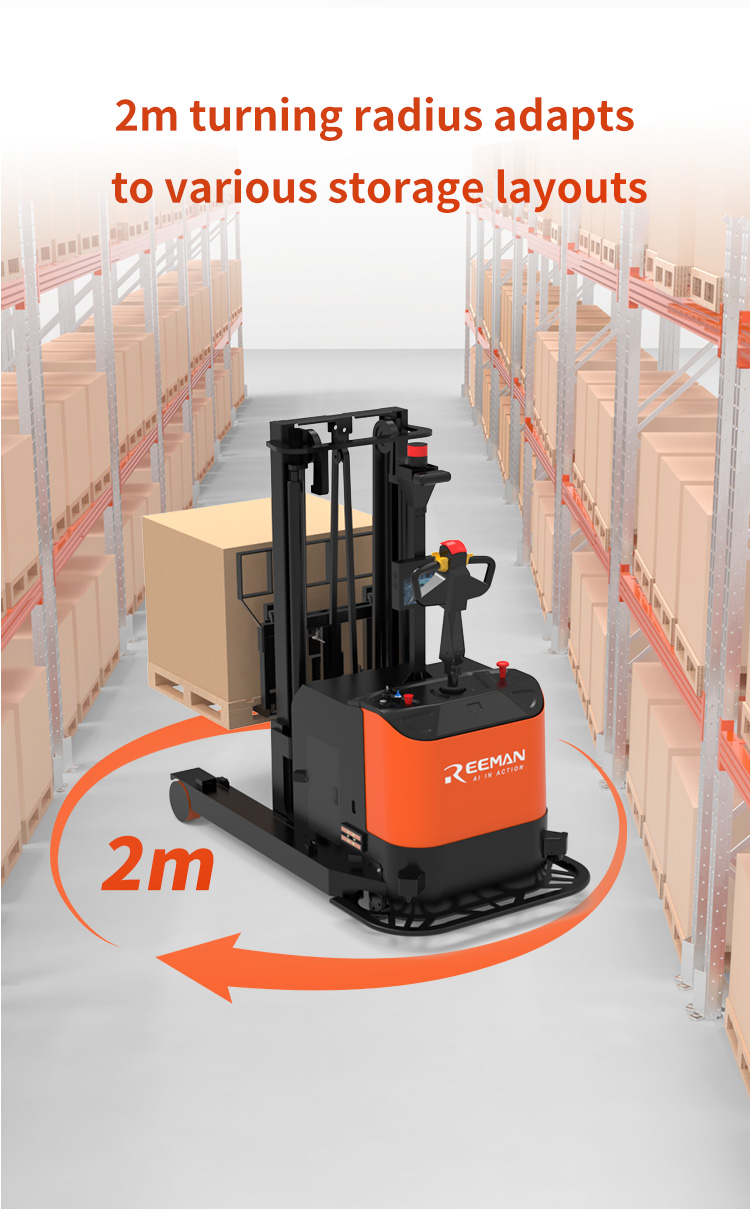
With 10 years of mobile robotics expertise, 200+ patents, and 10,000+ robots deployed globally, Reeman delivers cutting-edge AGV technology that works right out of the box.

Laser SLAM Navigation

Advanced laser SLAM technology provides centimeter-level accuracy without infrastructure modifications

Intelligent Obstacle Avoidance

Millisecond-level response with multi-layer safety systems for reliable operation in dynamic environments

Open SDK Platform

Comprehensive development kit for seamless integration with existing WMS, ERP, and MES systems

Out-of-Box Deployment

Minimal setup required—most Reeman AGV solutions deploy within days, not months

AGV Technology Applications by Industry

AGV technology delivers measurable efficiency gains across manufacturing, warehousing, and logistics operations of all scales.

Manufacturing

Automated material delivery to production lines, work-in-process transport, and finished goods movement.

  • Assembly line feeding
  • Work-in-process handling
  • Raw material delivery
  • Finished goods transport

Warehousing

Pallet transport, put-away operations, order picking support, and cross-docking automation.

  • Pallet put-away and retrieval
  • Order picking support
  • Cross-docking operations
  • Replenishment transport

Distribution & Logistics

Truck loading/unloading, staging area management, and sortation system feeding.

  • Truck loading/unloading
  • Staging area transport
  • Sortation induction
  • Returns processing

Getting Started with AGV Technology

Ready to explore AGV automation for your facility? Use this checklist and connect with our solutions team to begin your automation journey.

AGV Implementation Checklist

  • Map current material flows and identify automation opportunities
  • Calculate potential ROI based on labor savings and throughput gains
  • Evaluate navigation technology options for your environment
  • Assess facility infrastructure and identify modification needs
  • Review integration requirements with existing WMS/ERP systems
  • Plan phased deployment approach and change management strategy

Start Your AGV Project

Connect with Reeman's automation experts to discuss your specific requirements and receive a customized AGV solution proposal.

Request Consultation