

Why Modern Factories Prioritize Transport Automation
Many managers focus on increasing production speed while overlooking logistics stability. In reality, production capacity is capped by whether materials arrive at the right place, at the right time, every shift.
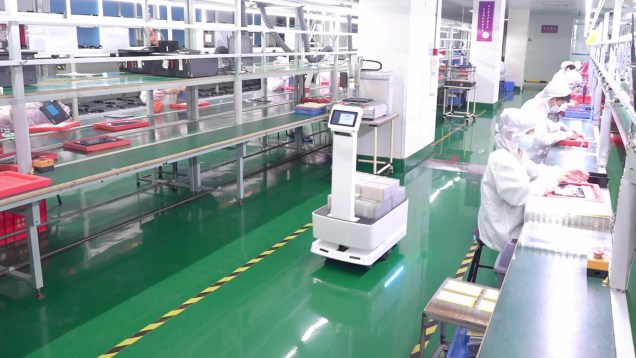
Even the most advanced production line slows down if logistics cannot keep pace. This is why transport automation has become central to factory upgrades, and why Reeman AMR material handling robots are being adopted at accelerating rates.
Manual Transport Cannot Meet Stability Requirements
Transport is not simply moving goods from point A to point B. The real challenge is ensuring consistent, punctual delivery across every shift and every process. Manual labor cannot maintain this level of stability.
Labor shortages, night-shift difficulties, safety risks, and management complexity have turned transport roles into high-cost, high-variability positions. Many factory owners now recognize that critical processes cannot depend on unstable factors.
AMR Architecture Designed for Real Factory Conditions
Reeman AMRs rely on LiDAR and vision-based autonomous navigation rather than fixed routes. Unlike traditional AGVs, they do not require site reconstruction and can be deployed quickly by scanning and mapping the environment.
They coexist with people and forklifts without disrupting traffic, making them ideal for factories with frequent layout changes or flexible production lines. Deployment time and transformation cost are both significantly reduced.
Multi-Robot Coordination That Improves Under Pressure
Reeman’s scheduling system enables dozens of AMRs to collaborate dynamically within the same facility. Tasks are prioritized automatically, routes are optimized in real time, and congestion is avoided through intelligent coordination.
When workload increases, robots remain stable and predictable. Unlike manual operations, performance does not degrade under pressure.
Turning Logistics Into Measurable, Optimizable Data
Every transport task is logged with timestamps, routes, and execution status. What was once managed by experience becomes transparent and measurable.
This data-driven visibility allows factories to identify real bottlenecks and optimize logistics flow. Many companies eventually discover that unstable production rhythms were caused not by equipment, but by opaque and unmanaged transport processes.
Stability as a Long-Term Competitive Advantage
Speed can always be increased later, but stability builds long-term competitiveness. Reeman AMR material handling robots are becoming essential infrastructure for factories seeking consistent output, lower risk, and scalable automation.
もっと見る: Reemanbot

ロボット犬の価格帯は、コンシューマー向け最廉価のUnitree Go2 Airの1,600ドルから、フル構成のBoston Dynamics Spotエンタープライズ導入の195,000ドル以上まであります。研究用プラットフォームは2,890〜18,000ドル。産業用四足歩行ロボットはモデルと構成に応じて15,000〜88,000ドルです。適切な予算は、ユースケース、地形要件、オープンSDKアクセス・エンタープライズサポート・認定IP等級の必要性に完全に依存します。

広告ロボット:ブランドがエンゲージメントのためにモバイルサービスロボットを活用する方法

Reeman AMRロボット、自動車部品工場の重荷重輸送効率化を実現

Reeman AMRロボット:製造業向け柔軟なスマートソリューション

Reeman AMRロボットが産業物流と工場自動化を促進

Reeman AMRロボットで自動車部品工場の効率向上